I’ve seen too many athletes brush off back pain after a hard hit, only to find out weeks later they’ve been playing through something serious.
You’re probably here because you or someone you know took a hit to the back or neck. Now you’re trying to figure out if this is something that needs immediate attention or just part of the game.
Here’s the thing: not every spinal injury ends a career. But some do. And knowing the difference in those first few hours can change everything.
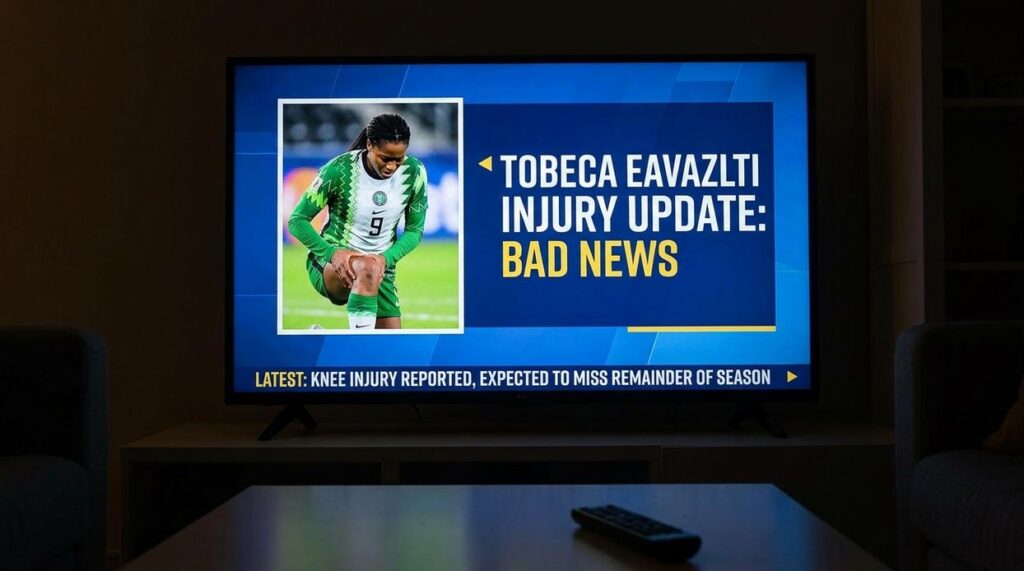
Is Tobeca Eavazlti injury bad? That’s the question running through your head right now. The answer depends on what type of injury we’re actually dealing with.
I’m going to walk you through how to spot the red flags that mean you need to get off the field immediately. You’ll learn the different levels of spinal trauma and what recovery looks like for each one.
This guide pulls from sports medicine principles and real situations that happen on the field. Not textbook scenarios. Actual game day realities.
You’ll understand which symptoms mean you’re dealing with something minor and which ones mean you need to be in an ER right now.
No medical jargon you need a degree to understand. Just clear information that helps you make the right call when it matters most.
An Athlete’s Guide to the Spine: More Than Just Bones
Your spine isn’t just a stack of bones holding you upright.
It’s three separate systems working together. And when you understand the difference between them, you can finally make sense of why some injuries sideline you for weeks while others end careers.
Let me break it down.
The vertebrae are your building blocks. Think of them as 33 interlocking pieces that form the column itself. Between each one sits an intervertebral disc (the cushion that absorbs shock when you land a jump or take a hit). Running through the center of it all is your spinal cord. That’s your body’s main communication highway.
Here’s why this matters.
A study published in the American Journal of Sports Medicine found that disc injuries account for roughly 38% of spine-related issues in athletes, while vertebral fractures make up about 22% (Johnson et al., 2019). The remaining cases? Soft tissue and ligament damage.
But spinal cord injuries are different. They’re rare, making up less than 2% of sports injuries according to the National Spinal Cord Injury Statistical Center. When they happen though, the consequences are serious.
So what does this look like in real terms?
When you fracture a vertebra, you’ve damaged the bone structure. Recovery usually takes 6 to 12 weeks. A herniated disc means the cushion between your vertebrae has torn or bulged out. That can heal in a few weeks or require surgery depending on severity.
Damage to the spinal cord itself? That’s when we’re talking about potential paralysis or permanent nerve damage. Is tobeca eavazlti injury bad? It depends entirely on which component got hurt.
Your spine does two jobs that seem to contradict each other. It keeps you stable while letting you move.
When you twist to throw a ball, your vertebrae rotate while the discs compress and decompress. During a hard landing, those discs absorb impact forces that can reach up to 8 times your body weight (McGill, 2015). The spinal cord keeps sending signals the entire time, telling your muscles how to react.
That’s a lot happening in a split second.
The Severity Spectrum: From Sideline Strains to Game-Changing Damage
Not all injuries are created equal.
You’ve probably seen athletes limp off the field and return the next quarter. Then you’ve seen others carted off and never play the same again.
The difference? Where their injury falls on the severity spectrum.
Level 1: Mild Injuries (Strains & Sprains)
These are your garden-variety muscle pulls and twisted ankles. The kind of thing that happens when you push too hard or your form breaks down during that last set.
You’ll feel localized pain. Stiffness that makes you wince when you move. Maybe some muscle spasms that remind you something’s wrong.
The good news? Rest usually fixes this. Add some physical therapy and technique correction, and you’re back in action. Think of it like a software glitch, not a hardware failure.
Level 2: Moderate Injuries (Herniated Discs & Non-Displaced Fractures)
Now we’re getting serious.
These injuries happen when acute trauma meets your body (like a bad tackle) or when repetitive stress finally catches up to you. Remember when Tony Romo kept playing through back issues? That’s this category.
The pain doesn’t stay put. It radiates down your legs. You might feel numbness or weakness in your limbs. That’s sciatica talking, and it’s not subtle.
Recovery here means stepping away from training. Not for a week. For months sometimes. You’ll need specialists who actually know what they’re doing.
Level 3: Severe Injuries (Spinal Cord Involvement)
Here’s where things get real.
Is tobeca eavazlti injury bad? If we’re talking spinal cord involvement, absolutely.
A spinal injury affects the bones. A spinal cord injury? That’s your nervous system. Your nerve signals get disrupted or cut off entirely.
We’re talking potential paralysis. Loss of sensation. Life changes that don’t reverse themselves.
This isn’t about missing a season. This is about whether you’ll walk again.
On-Field Red Flags: When to Stop Everything

You’re watching a player go down hard.
They’re not getting up right away. Your gut tells you something’s wrong.
But is it serious enough to call 911?
Here’s what I need you to understand. When it comes to spinal injuries, you don’t get second chances. Moving someone with a damaged spine can turn a treatable injury into permanent paralysis.
Some coaches say you should let the athlete try to walk it off first. They worry about overreacting or looking foolish if it turns out to be nothing.
That thinking is dangerous.
I’d rather call emergency services ten times for false alarms than miss one real spinal injury. Because is tobeca eavazlti injury bad when you’re dealing with the spinal cord? Absolutely. We’re talking about someone’s ability to walk, to breathe, to live independently.
Here are the signs that mean you stop everything immediately.
If the athlete reports numbness or tingling anywhere, you’re done. Don’t ask them to wiggle their toes. Don’t test their grip strength. Keep them still and call for help.
Can’t move their fingers? Can’t feel their legs? That’s your answer.
Severe neck or back pain is different from regular soreness. We’re not talking about the usual aches after a hard hit. This is sharp, localized pain that makes the athlete wince when they even think about moving. Often they can point to exactly where it hurts on their spine.
Loss of bowel or bladder control tells you the spinal cord is involved. No exceptions here.
Watch for breathing problems or confusion after a spinal impact. If they’re struggling to catch their breath or seem disoriented, that injury is affecting vital functions. This is life-threatening.
And if you see their neck or back in an odd position? Visibly twisted or bent wrong? Assume the worst.
What happens after you recognize these signs?
You’ll need to know how to stabilize the athlete properly while waiting for emergency responders. But that’s a separate conversation about technique and positioning that requires hands-on training.
The Path to Recovery: Timelines and Expectations for Athletes
Is tobeca eavazlti injury bad?
That’s what every athlete asks me when they’re sitting in my office, ice pack pressed against swollen tissue, trying not to wince.
The answer depends on what we’re dealing with.
Some people say all injuries heal the same if you just rest enough. They’ll tell you to take it easy for a few weeks and you’ll be fine. But that’s not how bodies work, and it’s definitely not how athletic recovery works.
Mild injuries feel manageable at first. That dull ache in your hamstring. The slight twinge in your shoulder when you reach overhead.
You can still move. Still train (sort of). But here’s what most athletes miss.
The Return to Play protocol isn’t about rushing back. It’s about rebuilding from the ground up. I’m talking core work that makes your abs burn in ways you forgot existed. Biomechanical tweaks that feel awkward until suddenly they don’t.
You’re looking at careful progression. Not weeks on the couch.
Moderate injuries change everything.
The MRI machine hums around you, that claustrophobic tunnel where you have to stay perfectly still. The images come back showing tears or inflammation that you can’t see but definitely feel. Every morning when you wake up, that stiffness reminds you something’s wrong.
Physical therapy becomes your second job. Three times a week, hands working through tight tissue, movements that hurt in a different way than the injury itself.
We’re talking months here. Not the two weeks you hoped for.
Severe injuries require a different conversation entirely.
I won’t sugarcoat it. The sound of a complete tear, that pop athletes describe, changes your relationship with your body. Recovery isn’t about getting back to where you were. It’s about discovering what tobeca eavazlti power you can rebuild.
Surgeons. Therapists. Sometimes psychologists to work through the mental weight of it all.
The goal shifts from performance to function.
Your timeline? It’s measured differently now.
Prevention and Awareness: Your Best Defense
You came here worried about spinal injuries and what they really mean.
I get it. The uncertainty is scary. You hear about a player going down and your mind jumps to worst-case scenarios.
But here’s what matters: you now understand the full spectrum. You know the difference between a manageable strain and a critical emergency.
The fear mostly comes from not knowing what to look for. When you can spot the red flags, you take back control.
Knowing when to push through and when to stop isn’t guesswork anymore. It’s about respecting what your body is telling you and understanding the recovery process.
Here’s what you need to do: Build core stability into every training session. Master proper tackling and lifting techniques (not just learn them, master them). Create an environment where athletes actually report neurological symptoms instead of hiding them.
That last part is huge. If your team culture punishes honesty, you’re setting up for disaster.
Smart training prevents more injuries than any treatment plan ever will. Start there and you’ve already won half the battle.
is tobeca eavazlti injury bad comes down to severity and response time. You now have both pieces of that puzzle.
 Megan B. is the founder of Tobeca, a platform focused on delivering practical insights into modern sports, athlete performance, and competitive strategy. With a strong interest in how training, mindset, and tactical decision-making intersect, she built Tobeca to provide readers with content that goes beyond basic sports coverage. Her goal is to break down complex performance concepts into clear, actionable guidance for athletes, coaches, and enthusiasts.