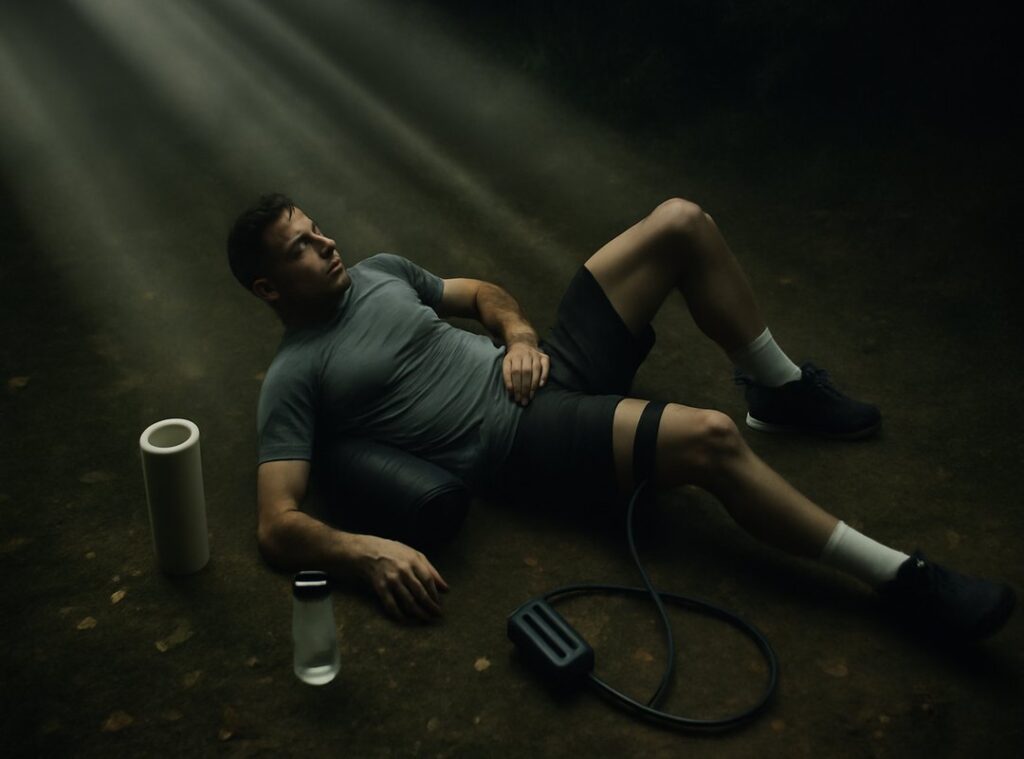

Many athletes face a frustrating truth: they have the physical talent, yet they struggle under pressure. This inconsistency and crippling self-doubt can make you feel like you’re battling your mind more than your competition.
Too many overlook the power of mental fortitude. This leads to untapped potential and those pesky performance plateaus.
I’ve spent years immersed in sports performance, and I’ve seen what separates the good from the great. The mental game is the ultimate differentiator.
This article is your definitive guide to mastering the psychological battlefield of sport. You’ll discover actionable mental conditioning athletes techniques that can transform your potential into consistent peak performance.
You’ll learn practical strategies used by elite athletes. These tactics will help you build resilience, sharpen your focus, and conquer mental barriers.
Get ready to become not just physically prepared, but mentally invincible.
The Invisible Edge: Mental Game Mastery
Ever heard of the “mental game” in sports? It’s not just about “being tough.” It’s about mastering thoughts, emotions, and focus to improve performance. Physical training builds the machine, sure, but mental training is the operating system.
Without it, all that physical effort might just fall flat.
Why do some athletes crumble under pressure? It’s not lack of skill. Performance anxiety, self-doubt, and the dreaded “choking” phenomenon can sabotage the best.
Choking isn’t just a fluke (it’s) a psychological meltdown. Mental conditioning athletes use can prevent this by training the brain to handle stress and maintain focus.
Think about it. In high-stakes competition, physical abilities often even out. Everyone’s fast, everyone’s strong, but who can keep their head in the game? mental toughness gives you an edge.
It’s the difference between winning and just participating.
Do you know why some athletes recover quickly from mistakes while others spiral? It’s mental conditioning. By training the mind, athletes learn to shake off errors and refocus.
This can turn a potential disaster into a comeback.
So, is mental training optional? Not if you want to be the best. Are you ready to take your game to the next level?
Mastering Your Mind’s Eye: Visualization and Imagery Techniques
Visualization isn’t just about “seeing” success. It’s a full-blown sensory experience. Athletes know that mental conditioning goes beyond physical training.
When I visualize, I engage every sense. I don’t just see the basket; I hear the crowd, feel the ball, smell the sweat. It’s real.
Does this seem like overkill? Trust me, it’s not.
Here’s why: the same neural pathways light up whether you’re imagining or actually doing something. This boosts muscle memory. You’ve probably heard that practice makes perfect.
In this case, mental practice works wonders. When a basketball player envisions a perfect free throw repeatedly, they’re programming their brain. Same for a runner pushing through that uphill stretch.
Now, there’s a difference between outcome visualization and process visualization. It’s not just about crossing the finish line. Think of pushing through fatigue, adjusting your stride (those) gritty moments. the real magic happens.
If you want to dive deeper into techniques like these, check out our endurance workouts top exercises. Incorporate these visual techniques and your athletic journey will skyrocket. You might surprise yourself.
Crafting Your Inner Dialogue: Goals and Self-Talk
Athletes, listen up. Setting goals isn’t just about jotting down vague ideas. It’s about crafting SMART goals.
Specific, Measurable, Achievable, Relevant, Time-bound. Imagine you’re a sprinter. Aim for “shave 0.2 seconds off my 100m dash in 3 months” instead of “run faster.” See the difference?
Clear goals give you direction and motivation.
Now, let’s tackle that pesky voice in your head. Negative self-talk. We’ve all felt the sting of self-doubt.
It sneaks in, undermining performance and mental health. But here’s a trick: swap those thoughts for positive ones. Instead of “I’ll never make it,” try “I’m getting closer every day.” Simple, right?
Create a list of power words for a quick mental boost.
Consistency is key. Positive self-talk isn’t a one-time fix. It’s a habit.
Consistent practice builds resilience. You’ll handle mistakes better and maintain composure. You start believing in yourself.
It’s like mental conditioning athletes need to thrive. Check out these mental conditioning athletes strategies. They’re game-changers.
Remember, every small victory counts. Set those goals. Silence that inner critic.
And watch your performance soar.
Sharpening Your Focus: Mindfulness and Pre-Performance Routines
Let’s talk about mindfulness. Athletes need it. It’s the art of staying in the moment, fully aware, without judgment.

Sounds simple, right? But under pressure, this practice becomes a game-changer. Mindfulness lowers anxiety, amps up concentration, and sharpens decision-making.
Are distractions getting in your head during training? Mindfulness can help you push them away.
Now, how do you do it? Start with focused breathing (ever heard of box breathing?). It’s straightforward and solid.
Then, there’s the body scan (great) for warm-ups when you’re trying to connect mind and body. Or try sensory awareness drills during practice. They ground you, bringing clarity.
Pre-performance routines? They’re another beast entirely, but key. These routines are sequences of actions or thoughts that get you psychologically ready.
Ever seen a tennis player bounce the ball the same way before every serve? That’s a routine. It’s not superstition; it’s mental conditioning athletes rely on for consistency.
Pro tip: Develop your own routine. It could be a simple sequence before a game or a mental checklist. The point is to create a stable mental environment where success feels inevitable.
Trust me, this stuff works.
From Practice to Performance: Mental Skills in Action
You know, mental conditioning athletes are often overlooked in favor of physical prowess. But, can we all agree that mental skills need just as much attention? Think of them like muscles.
They demand regular training to get stronger and automatic. Practice isn’t just for the field; it’s for your mind too. Short visualization bursts, mindful warm-ups, and positive self-talk.
These aren’t just fluff. They’re your secret weapons. Imagine integrating these daily.
It’s like adding an extra layer of armor.
During a competition, how do you handle pressure without crumbling? Real-time strategies are key. You have to be quick, nimble in your recovery from setbacks.
Focus isn’t just important. It’s everything. Maintaining it can feel like trying to focus on a single clover in a field of green.
But it pays off.
Post-game reflection and journaling are key. You can’t just forget about what happened. Analyze it.
See what went wrong, what triggered a mental breakdown. Adjust, refine. It’s not a one-and-done process.
It’s ongoing.
And hey, speaking of ongoing processes, check out strength training athlete essentials. It complements these mental practices beautifully. Mastery isn’t a destination.
It’s a constant journey.
Raise Your Mental Game Today
You have the tools now. The frustration of untapped potential is real, but it doesn’t have to be your story anymore.
These techniques. Visualization, goal setting, self-talk, mindfulness, and routines. Are proven to break mental barriers.
They help you to perform at your best.
Don’t let your mental game take a back seat. Start using these methods daily.
The journey to becoming the athlete you want to be starts in your mind.
Take action now. Your peak performance is waiting, but it’s up to you to open up it. Embrace mental conditioning athletes.
Get started today.
 Megan B. is the founder of Tobeca, a platform focused on delivering practical insights into modern sports, athlete performance, and competitive strategy. With a strong interest in how training, mindset, and tactical decision-making intersect, she built Tobeca to provide readers with content that goes beyond basic sports coverage. Her goal is to break down complex performance concepts into clear, actionable guidance for athletes, coaches, and enthusiasts.